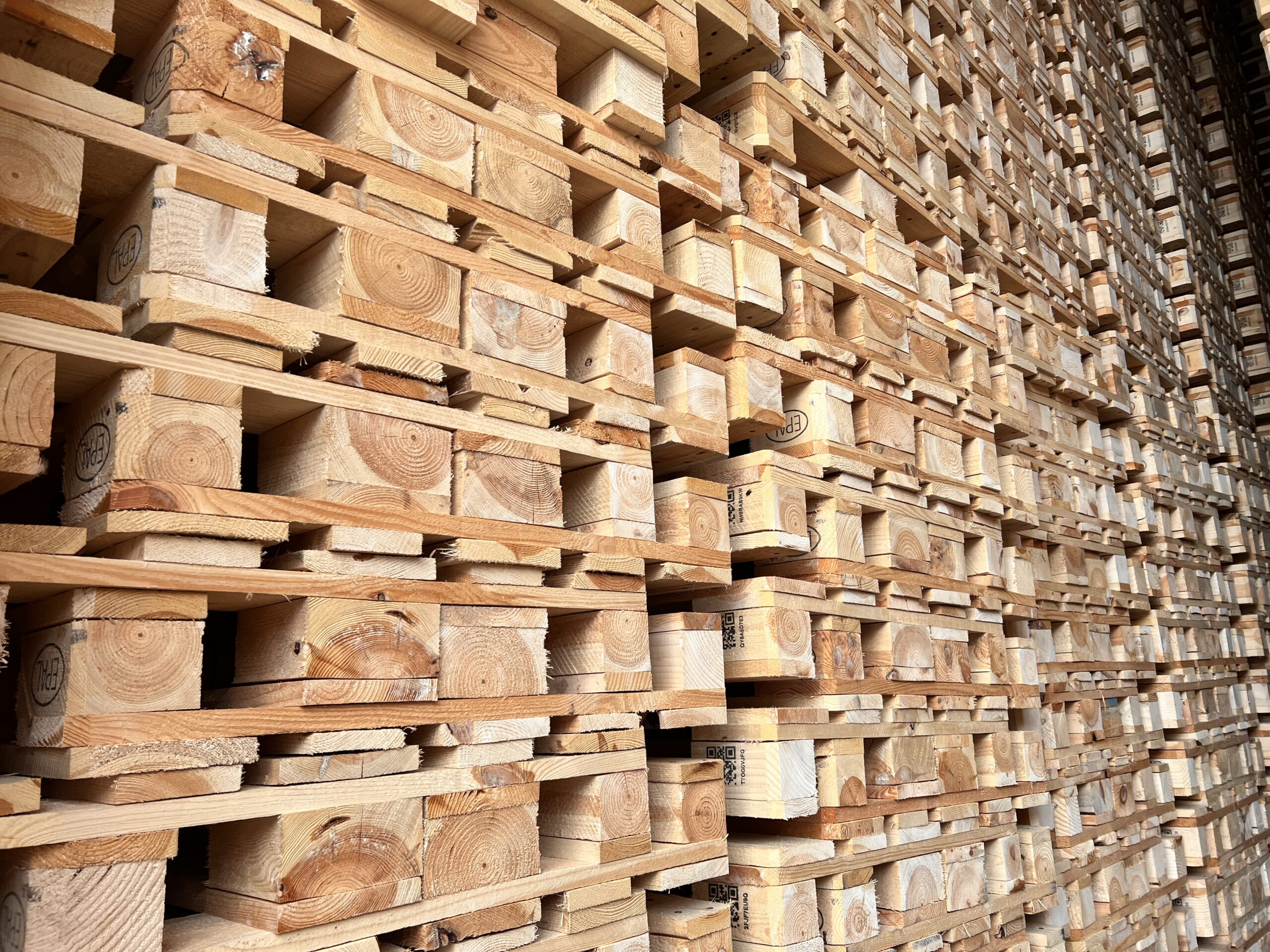
When a company starts looking for pallets, it soon becomes clear that „not all pallets are the same”. They differ in terms of dimensions, load capacity, material, intended use and price — and every wrong decision means either overpaying for logistics or damaged goods. This article answers the most frequently asked questions about types of wooden pallets and will help you choose the right type for your business.
What are wooden pallets and what are they used for?
A wooden pallet is a standardised transport platform made of wood, which enables the mechanical loading and unloading of goods using forklift trucks and pallet trucks. It forms the basis of modern logistics — it is estimated that there are over 4 billion pallets in circulation worldwide, the vast majority of which are made of wood.
Pallets are used for:
- the safe storage of goods in warehouses (stacking, high-bay racking),
- road, rail and sea transport,
- the export of goods abroad (in compliance with phytosanitary requirements),
- order fulfilment at distribution centres.
What are the main types of wooden pallets?
1. EPAL (EUR) pallet — European standard
Dimensions: 1200 × 800 mm
Load capacity: up to 1,500 kg dynamically / up to 4,000 kg statically
Height: 144 mm
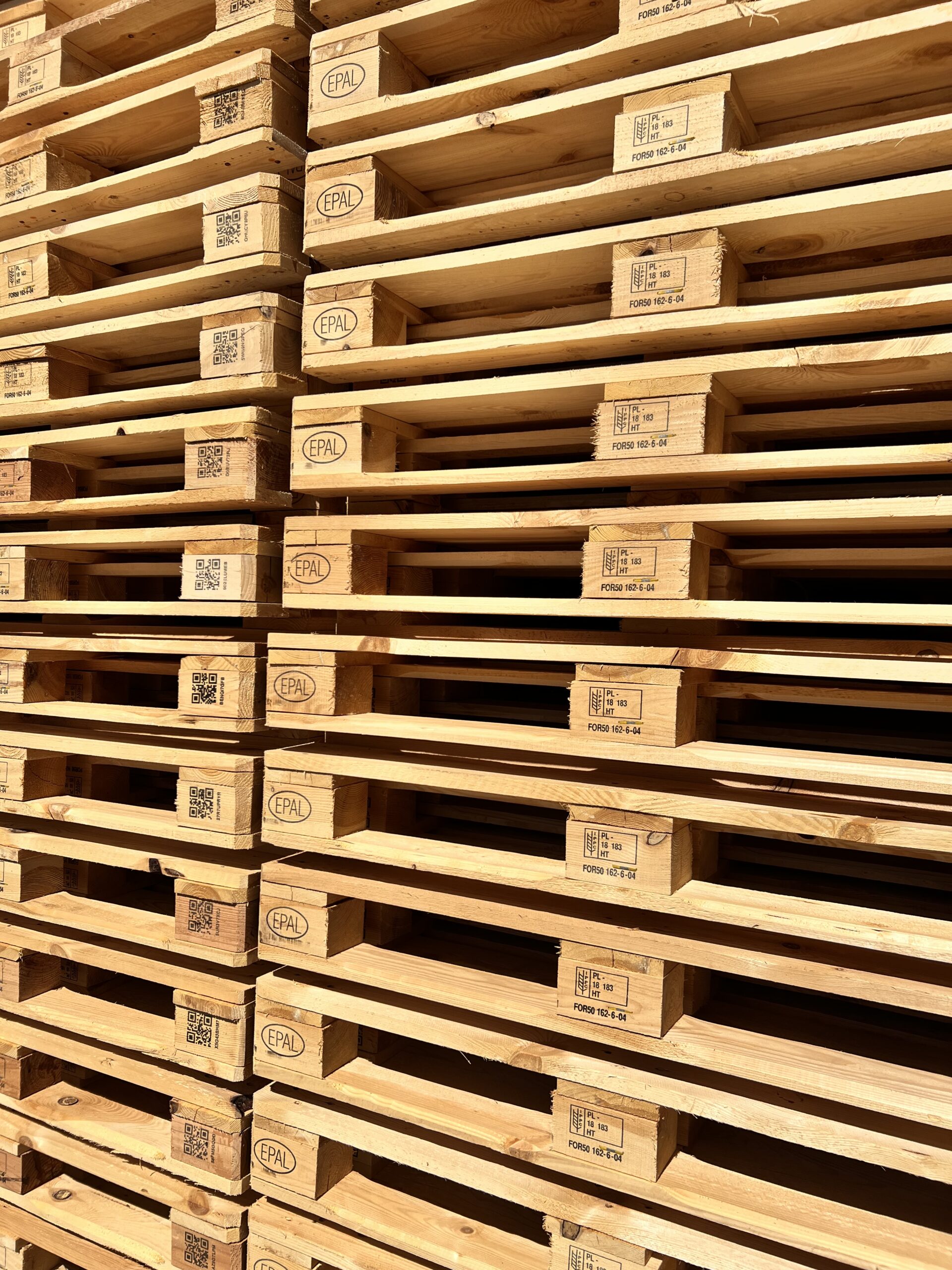
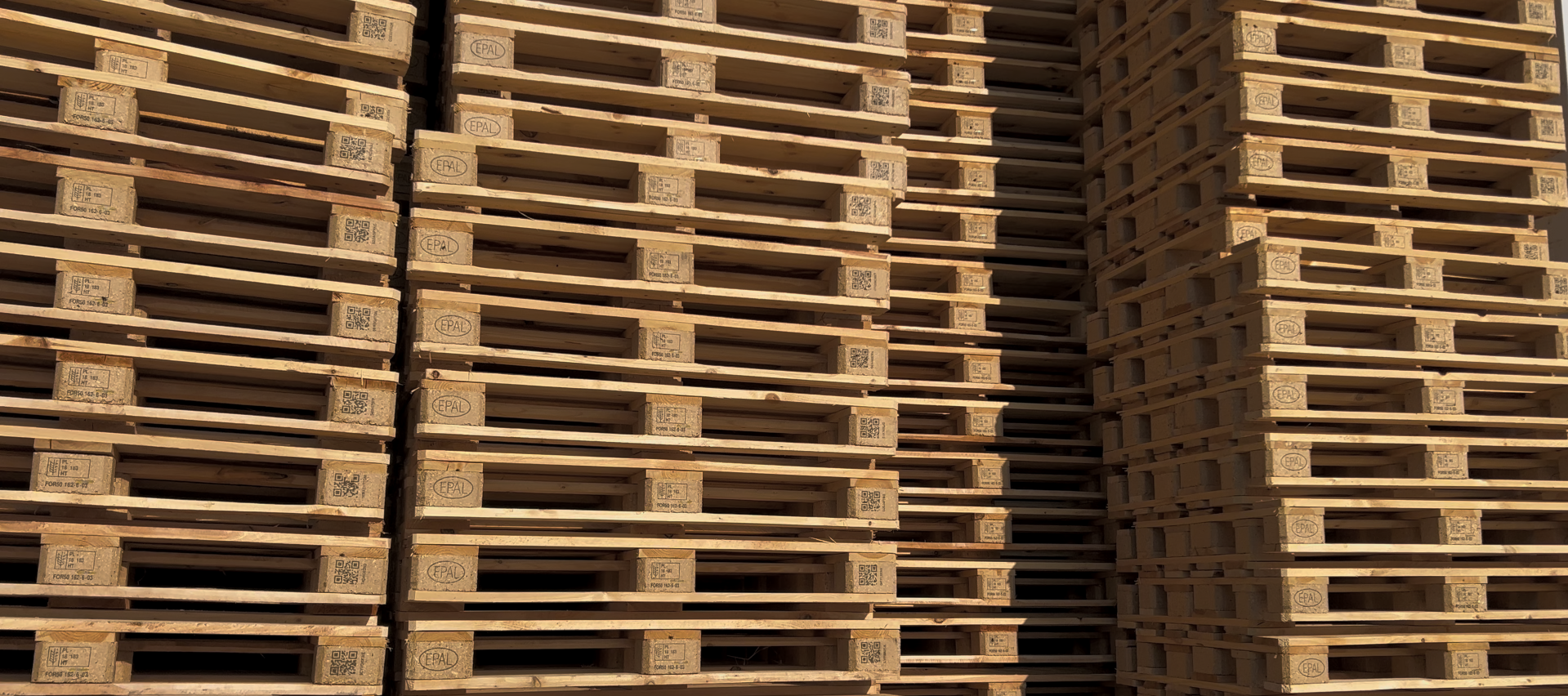
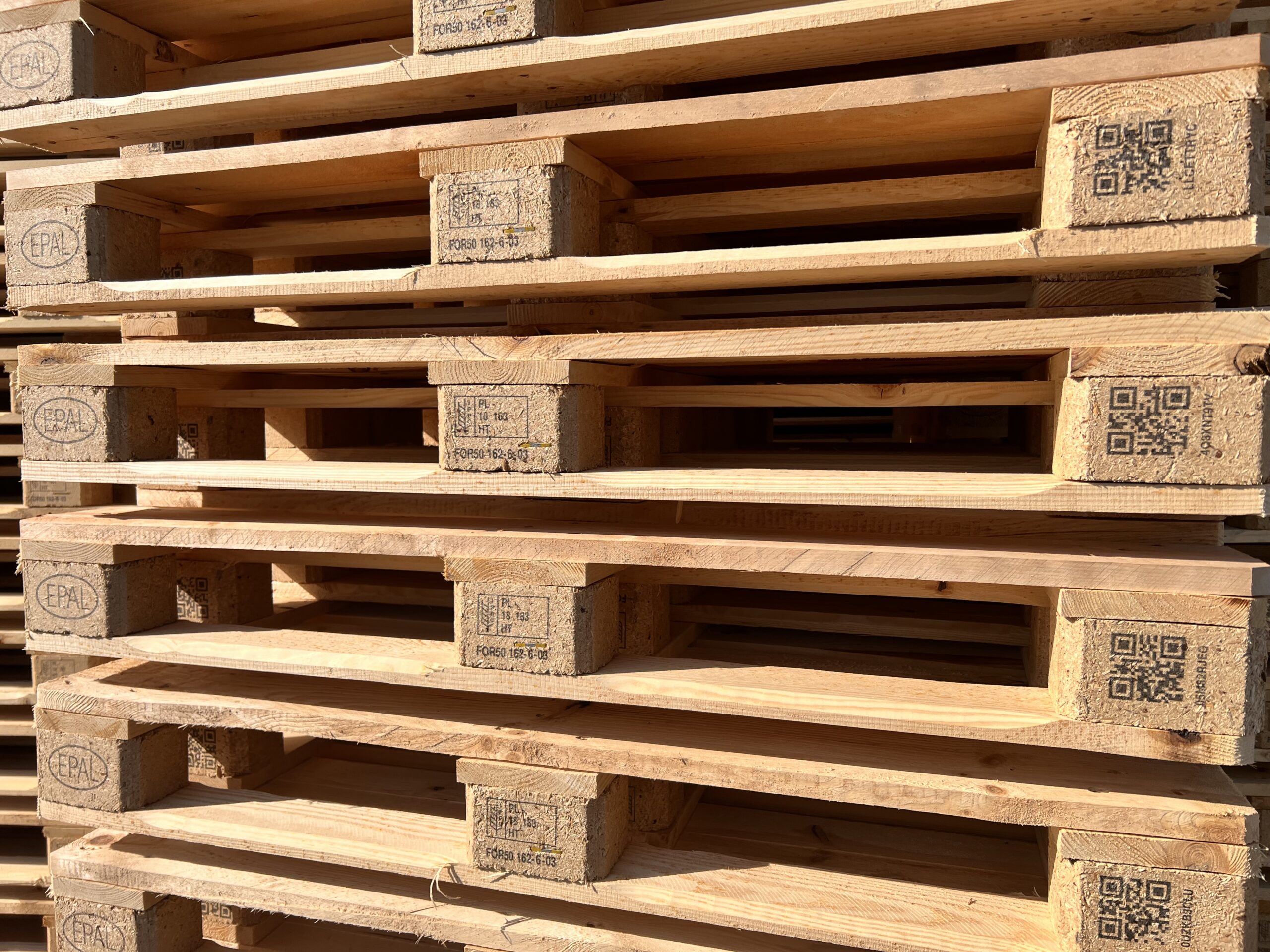
The EPAL pallet (formerly EUR) is the most widely used pallet in Europe. It is manufactured in accordance with the strict standards of the EPAL (European Pallet Association) and each pallet undergoes rigorous quality control. You can recognise it by the EPAL mark stamped on the block, the EPAL logo and the manufacturer’s number.
When should you choose an EPAL pallet?
- If you make regular deliveries to retail chains (Biedronka, Lidl and Kaufland require EPAL pallets).
- When you use a returnable pallet system, you can return used pallets and collect new ones through the pooling scheme.
- When your goods are on their way to customers across Western Europe.
Disadvantage: a higher purchase price than non-standardised pallets.
2. Used (refurbished) pallet
Dimensions: usually 1200 × 800 mm or 1200 × 1000 mm
Load capacity: depends on the condition — usually 800–1200 kg in dynamic testing
Used pallets are recycled pallets that have been sorted and, where necessary, repaired. They do not hold EPAL certification, but are suitable for a wide range of internal and transport applications where no specific standard is required.
When should you choose a second-hand pallet?
- When you’re looking for a cost-effective solution for your own warehouse.
- When your goods are not being delivered to customers who require certified pallets.
- When you want to reduce the cost of one-off domestic shipments.
Important: Always check the condition of the load-bearing boards and blocks — cracks can lead to accidents during loading.
3. UK pallet
Dimensions: 1200 × 1000 mm
Load capacity: up to 1,000–1,500 kg dynamically
The English pallet is wider than the standard EUR pallet and is the dominant type on the British market and in the Nordic countries. The colloquial name derives from its popularity in the British Isles, although officially it is a format used in many sectors (chemicals, household goods, food).
When should you choose an English palette?
- When you export goods to the UK or Ireland.
- When your products are wider and do not fit on an 800 mm EUR pallet.
- When a business partner or distribution network requires the 1200 × 1000 format.
Please note: British pallets are not interchangeable with the EPAL system.
4. American pallet (GMA pallet)
Dimensions: 1219 × 1016 mm (48 × 40 inches)
Load capacity: up to 1,500–2,000 kg dynamically
The GMA (Grocery Manufacturers Association) standard is the dominant format in North America. In Poland and Europe, it is mainly used by companies that export goods overseas or work with corporations with American roots.
When should you choose an American palette?
- When you export goods to the US, Canada or Mexico.
- When your company is part of a global supply chain based on US standards.
- When a 40-foot container is to be loaded in accordance with the requirements of a customer across the Atlantic.
5. Disposable pallet (industrial / non-standard)
Dimensions: any — made to order
Load capacity: determined on a case-by-case basis
Disposable pallets (also known as industrial or non-standard pallets) are manufactured to specific dimensions to suit goods, machinery or containers. They are not subject to EPAL standards and are not usually intended for repeated use.
When should you choose a disposable pallet?
- Non-standard goods (machinery, industrial equipment)
- The customer does not require high-quality pallets
- Domestic transport without the need for a certificate
Advantage: no need to account for individual pallets; lower unit cost.
6. Custom palette
Manufacturers such as HERB offer pallets made to individual specifications — different dimensions, different spacing between the boards, different blocks, different types of timber. Bespoke pallets are ideal wherever no standard size fits the customer’s production or logistics process.
Comparison of pallet types — table
| Pallet type | Dimensions (mm) | Dynamic load capacity | Certificate | Application |
|---|---|---|---|---|
| EPAL 1 / EUR | 1200 × 800 | Up to 1500 kg | Yes (EPAL) | Europe, retail chains, pooling |
| Second-hand | 1200 × 800 / 1000 | 800–1,200 kg | No / ISPM15 | Own warehouse, domestic transport |
| English | 1200 × 1000 | Up to 1500 kg | ISPM15 | UK, Scandinavia, household appliances, cleaning products |
| American | 1219 × 1016 | up to 2,000 kg | GMA (USA) / ISPM 15 | Exports to the USA/Canada |
| Disposable | Any | To be determined. | Not | films, machinery, bespoke goods |
| Made to order | Any | To be determined. | Optional | Manufacturing, specialist logistics |
What are the standard pallet dimensions in Poland?
In Poland, two formats are most commonly used:
1200 × 800 mm — EUR/EPAL pallets — are the absolute standard for retail, wholesale and exports to Western Europe. They are compatible with European tractor units, pallet racking and forklift trucks.
1200 × 1000 mm — English or industrial pallet — more commonly used in the chemical and electrical industries and for exports to the British Isles.
How much does a wooden pallet weigh?
It depends on the format and design:
- EPAL pallet: 20–25 kg
- English palette: 22–30 kg
- Disposable pallet (lightweight): 12–18 kg
- Customised pallets: from a few to several dozen kilograms
Weight is an important factor when calculating a lorry’s load capacity (particularly for loads of up to 3.5 tonnes) and when loading by hand.
How do you read the markings on an EPAL pallet?
Each certified EPAL pallet has the following stamped on its blocks:
- EPAL logo — confirmation of compliance with the standard
- Manufacturer’s number — identification of the production site
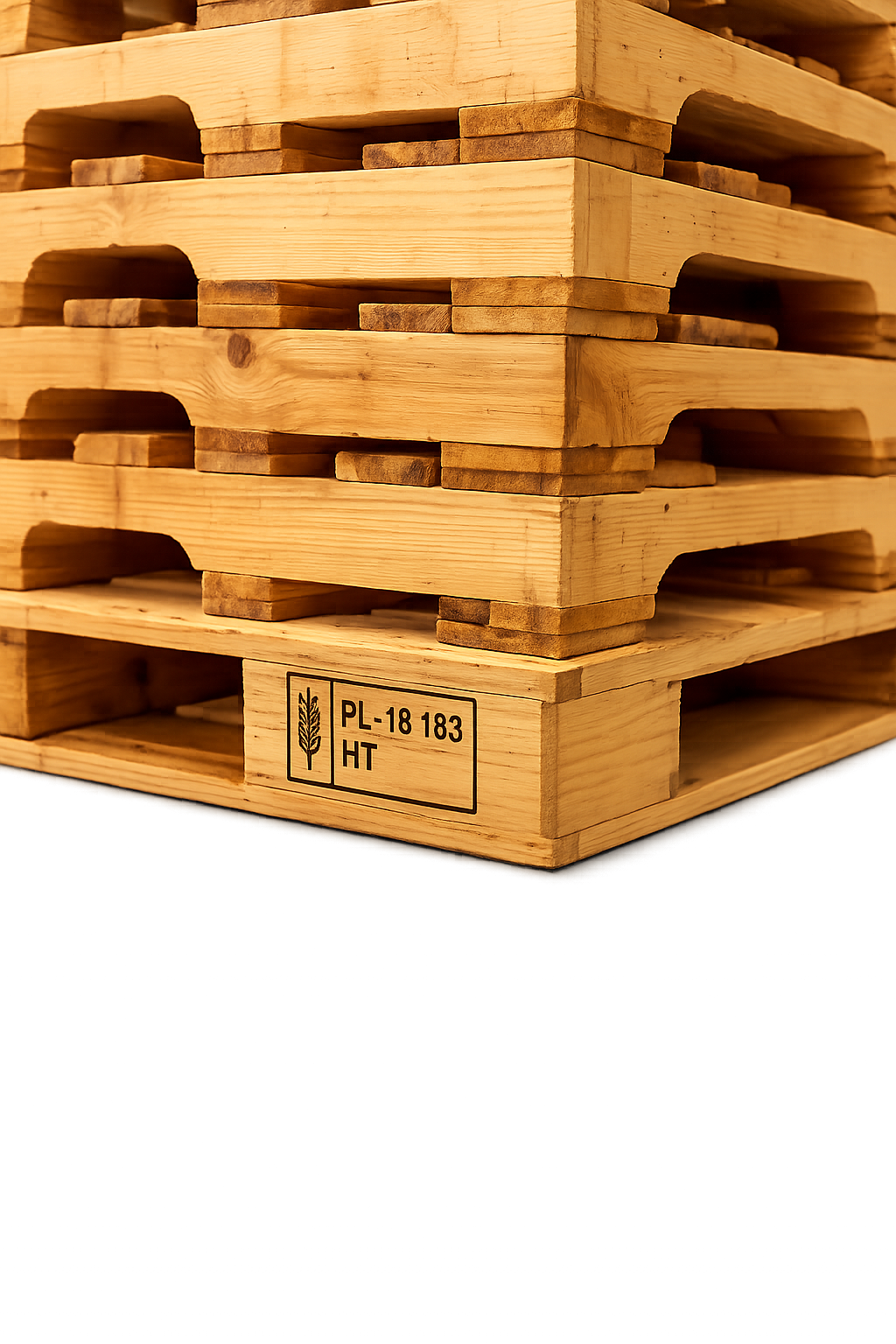
- IPPC / HT designation or MB — information on phytosanitary treatment (HT = heat treatment — required for exports outside the EU; MB = methyl bromide — banned in the EU since 2010, found on imported pallets)
Pallets marked ‘HT’ are safe for export to most countries around the world, including the USA, Australia and Japan.
Do wooden pallets have to be disinfected for export?
Yes — in accordance with ISPM 15 (International Standards for Phytosanitary Measures), wooden packaging materials intended for export outside the European Union must undergo phytosanitary treatment:
- HT (Heat Treatment) — heating to at least 56°C for 30 minutes in the heartwood
- The marking must be permanently stamped on the pallet
HERB supplies pallets with IPPC/HT certification, which enables trouble-free export to countries including the USA, Canada, Australia, Japan and China.
How to choose the right type of pallet for your business? — 5 questions you need to ask yourself
1. Where are your goods going?
Exports to Western Europe → EPAL. Exports to the UK → British standard. Exports to the USA → GMA / single-use with HT. Domestic market → used or EPAL.
2. Does the recipient require a specific format?
Retail chains usually require EPAL pallets. Factories and industrial customers are often flexible.
3. Do the pallets come back to you?
If so, invest in certified EPAL pallets or single-use pallets for that specific route. If not, single-use pallets are more cost-effective.
4. How much does your goods weigh and how much space do they take up?
Heavy loads require pallets with a high load-bearing capacity. Irregularly shaped goods — bespoke pallets.
5. What’s your budget?
New EPAL > Used EPAL ≥ English ≥ single-use > lightweight pallet. Choosing the cheaper option only makes sense if you don’t end up losing out due to complaints from business partners.
Summary — which type of pallet should you choose?
There is no one-size-fits-all answer — it depends on your supply chain. If you make regular deliveries to retail chains or export to Western Europe, EPAL pallet It’s a safe choice. Whether you’re importing into the UK or exporting overseas — English pallet or EPAL pallet with HT certification. For use in our own warehouse or for domestic transport second-hand pallets They can result in real savings or losses, depending on their quality.
At HERB, we supply all the types of pallets listed — new, used, EPAL-certified, British, American and made to order. We are based in Biłgoraj and serve businesses throughout Poland.
Do you have any questions about choosing pallets for your business? Contact us — We’ll advise you and provide a quote for delivery.