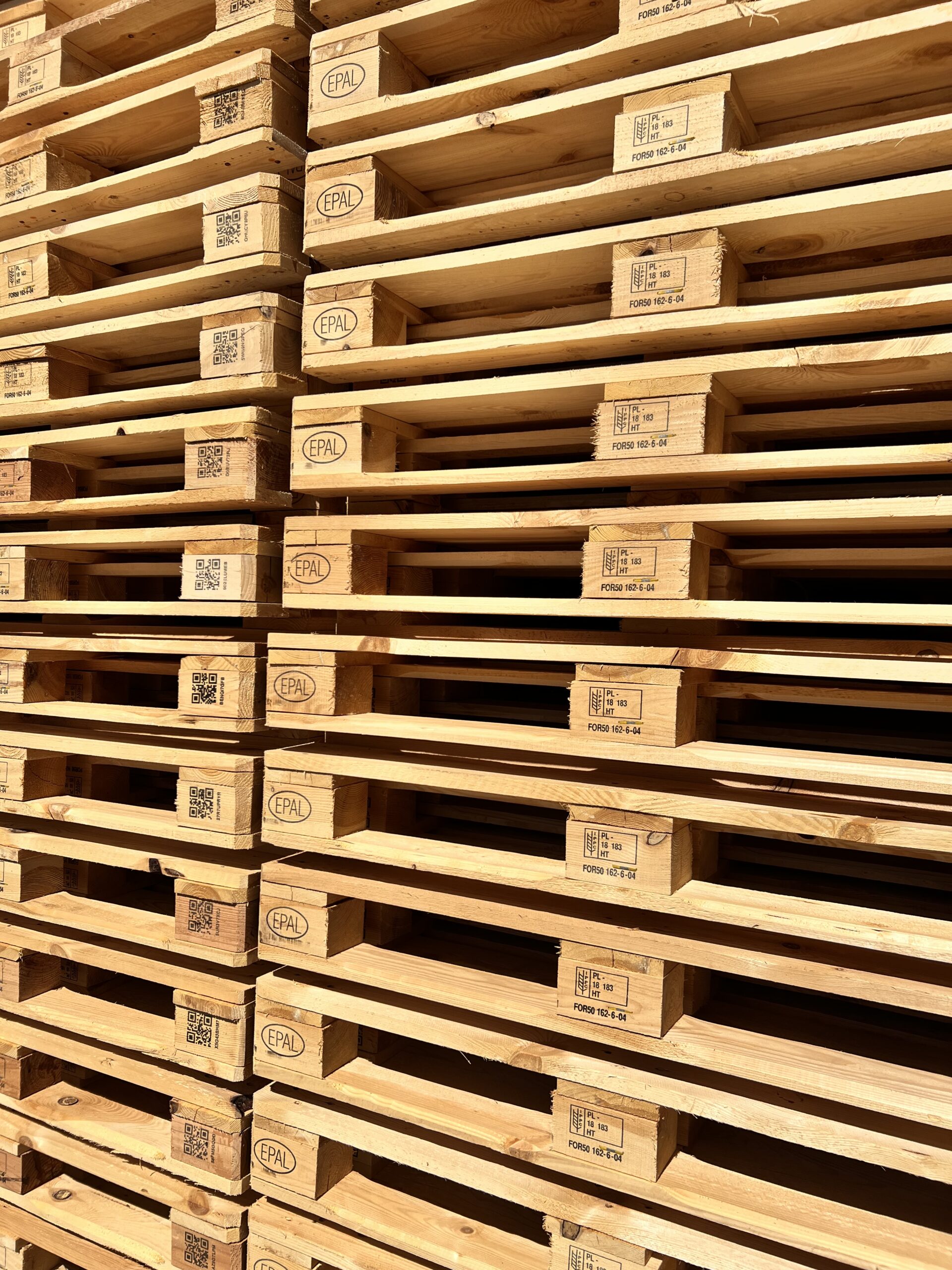
Every year, there are loads of pallets in circulation that merely look like Euro pallets. They look similar, cost less, and fall apart after the first heavy load. Below, we show you how to tell a genuine EPAL pallet from a fake in 30 seconds — based on what we check ourselves every day on the production line.
Short answer: You can recognise a genuine EPAL pallet by its dimensions 1200 × 800 × 144 mm, weighing approx. 22–25 kg, 78 nails arranged according to a set pattern, with an oval mark EPAL and the ear of corn IPPC / ISPM 15 marked on the corner blocks, a reference nail on the central block, and neatly cut corners.
What exactly is an EPAL pallet?
An EPAL pallet (commonly known as a Euro pallet, also designated as EUR 1) is a standardised wooden load-bearing pallet manufactured under licence from the European Pallet Association. „Standardised” means that every pallet — regardless of whether it was made in Poland, Germany or Spain — has identical dimensions, construction and strength. This means that pallets can be freely exchanged within the European pooling system and easily loaded onto semi-trailers and into containers.
You will come across two symbols: EUR (an older symbol from the UIC railway system) and EPAL. Structurally, they are the same pallets — the difference lies in the licensing system. New pallets are now produced almost exclusively to the EPAL standard, and it is these that are fully interchangeable in trade.
EPAL pallet dimensions — exact figures
Dimensions are not a matter of choice. A manufacturer with an EPAL licence has no leeway here — the thickness and position of each component are strictly specified.
| Parameter | Value |
|---|---|
| Length | 1,200 mm (120 cm) |
| Width | 800 mm (80 cm) |
| Height | 144 mm (14.4 cm) |
| Thickness of the load-bearing boards | 22 mm |
| Trolley entrance | four-way |
If the dimensions differ by even a few centimetres, it is not a standard EPAL 1 pallet, but a different format.
How much does an EPAL pallet weigh?
An empty EPAL pallet weighs around 22–25 kg. This is not a fixed figure — wood is hygroscopic, so a pallet soaked by rain can gain as much as 30–50% in weight and exceed 30 kg. This has practical implications: the pallet’s tare weight (assumed to be approx. 25 kg) is always added to the net weight of the load to ensure that the vehicle’s permissible gross weight and axle load limits are not exceeded.
What is the load capacity of an EPAL pallet?
This is the question that most people get wrong, because the load capacity depends on the situation:
| Type of load-bearing capacity | Value | When it applies |
|---|---|---|
| Dynamic | Up to 1500 kg | pallet in transit — trolley, transport |
| Static | up to 4000 kg | a pallet at rest, e.g. at the bottom of a stack |
| Arranged as desired | approx. 1,000 kg | uneven load on the shelf |
In practice, plan your load to a dynamic load capacity of 1,500 kg, distributing the weight as evenly as possible. The figure of 4,000 kg applies only to static loads and should not be regarded as a transport limit.
Construction: 11 planks, 9 blocks, 78 nails
In accordance with the EPAL Technical Regulations, each original pallet consists of exactly 11 planks, 9 bricks (brackets) and 78 special nails with a fixed pattern of arrangement and a diameter of approx. 3.9 mm. The most commonly used material is spruce or pine. It is this consistency — rather than the appearance itself — that ensures the pallet can withstand the specified loads.
That is why the number and pattern of the nails are one of the quickest ways to check for authenticity: cheaper imitations cut corners on the joints, and this is the first place to give way under load.
Markings that must appear on the original
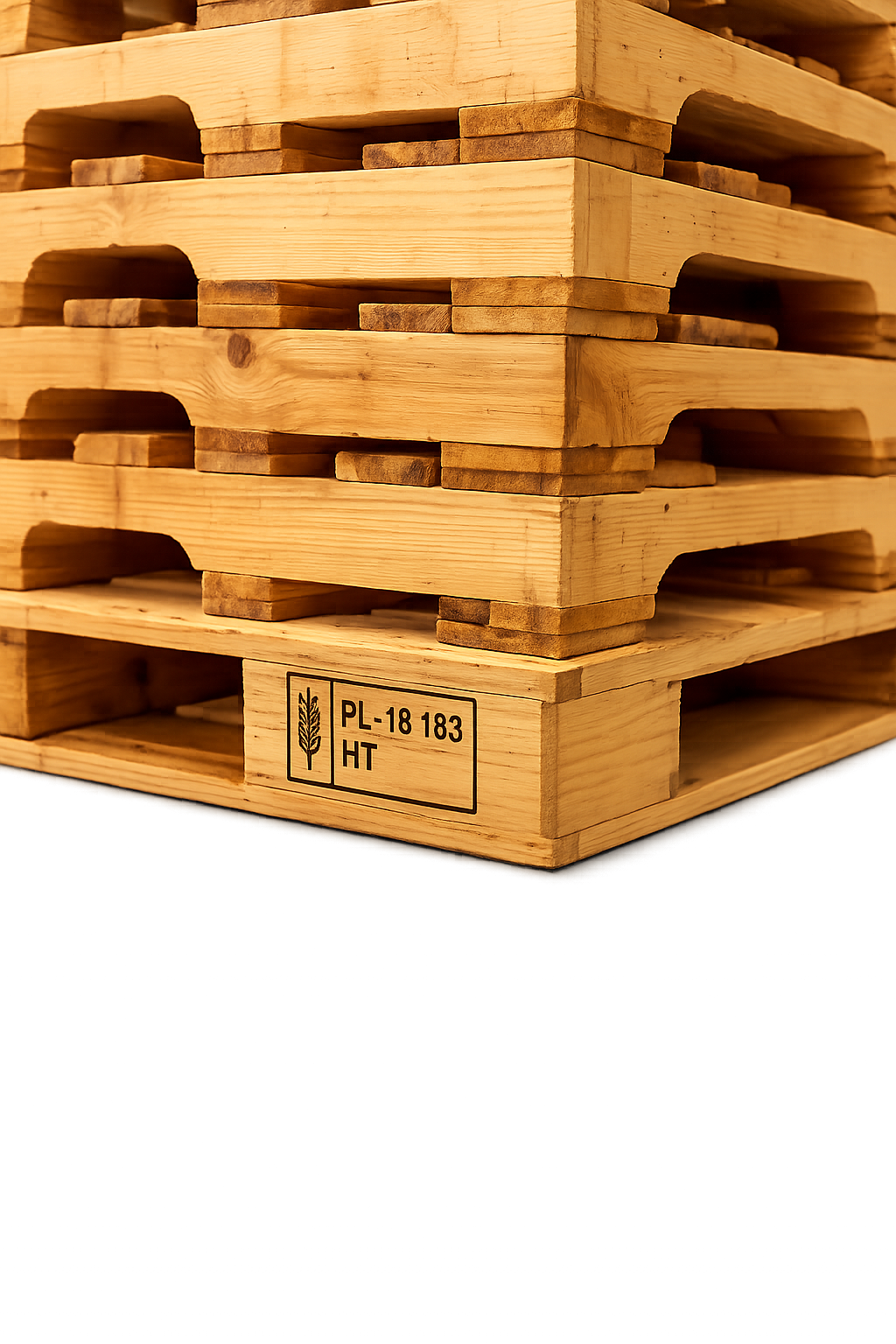
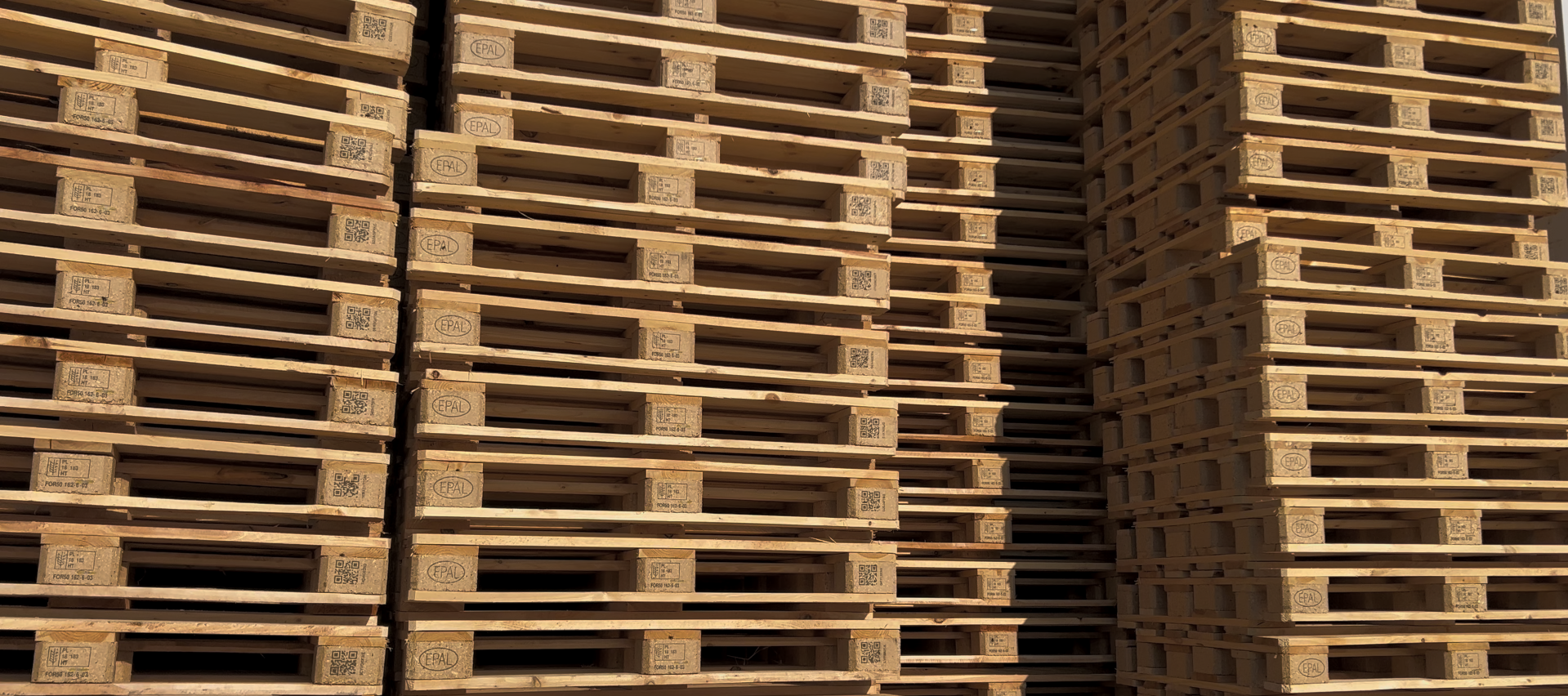
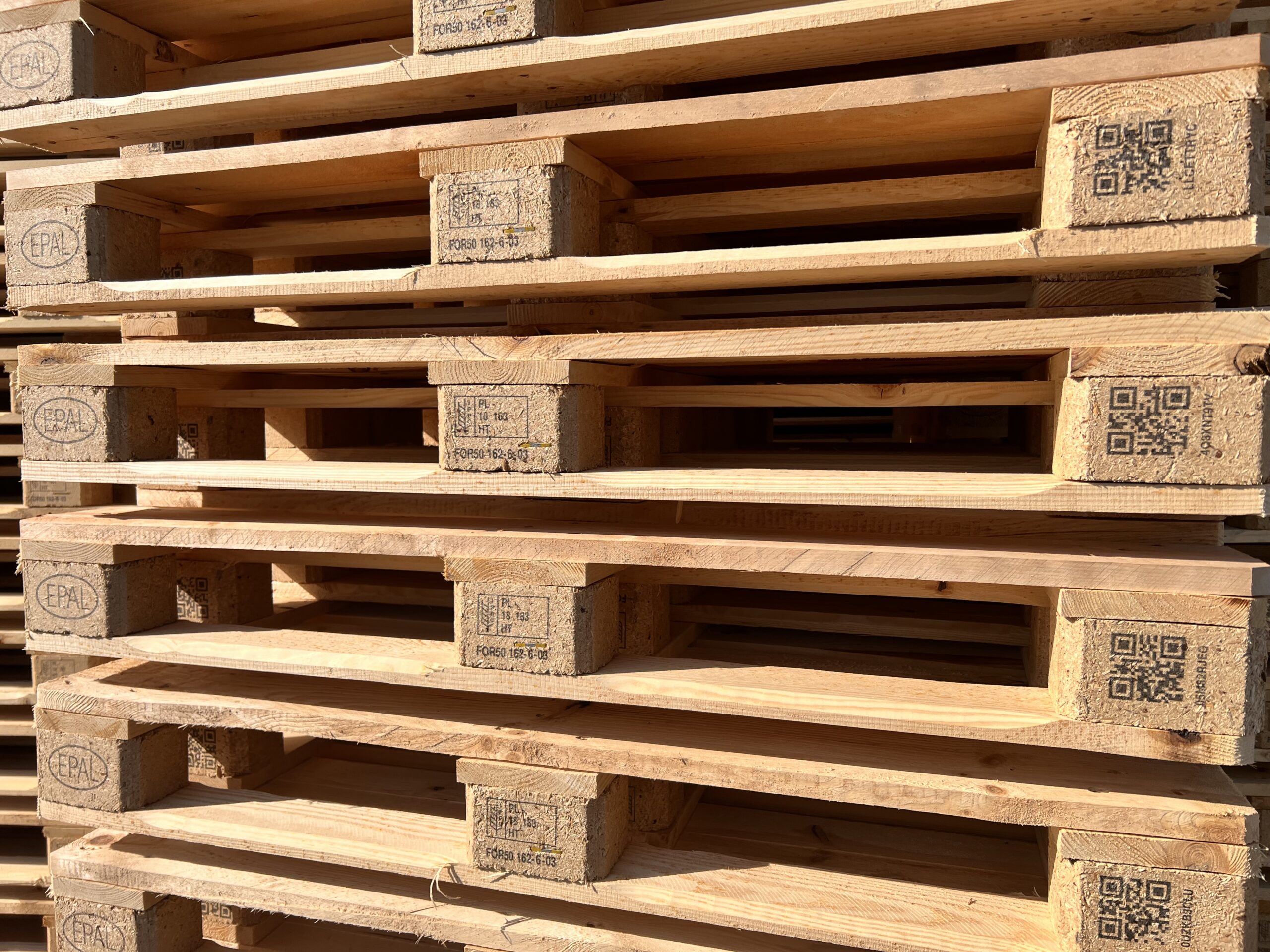
This is where authenticity is determined. On the corner blocks of an original EPAL pallet, you will find markings that have been burnt into the wood (not stuck on, not printed):
- An oval with the inscription ‘EPAL’ — the manufacturer’s licence mark.
- The ear of corn and the IPPC/ISPM 15 symbol — confirms that the timber has undergone heat treatment, as required, for example, for exports outside the EU.
- Manufacturer and country code — allows us to trace the origin of the pallet.
- Control clamp — on the middle block, which is particularly important for repaired pallets.
If there are no markings, or if they are unclear or appear to have been added later, treat this as a warning sign.
6 ways to tell if it’s the genuine article
- Dimensions They match to the millimetre: 1200 × 800 × 144 mm.
- EPAL oval It is burnt into the wood on the corner blocks.
- IPPC Ear confirms that the heat treatment complies with ISPM 15.
- 78 nails in a consistent, fixed pattern — without any omissions or improvisation.
- Control clamp found on the middle block.
- Corner sofas cut straight across, all four pieces the same; the timber must be free from blue stain and cracks.
EPAL versus single-use pallets — when is which the better option?
Disposable pallets (so-called ‘industrial’ pallets, which are lighter and not EPAL-certified) are often cheaper and are sufficient for one-way shipments where the pallet is not returned. However, they cannot be included in a pooling scheme, have a lower and less predictable load-bearing capacity, and still require ISPM 15 treatment for export. If pallets are in a returnable circulation system or are being sent abroad, EPAL is cheaper on a life-cycle basis, despite the higher initial cost.
Frequently Asked Questions
What are the dimensions of an EPAL pallet?
1200 × 800 × 144 mm (120 × 80 cm, height 14.4 cm). The support boards are usually 22 mm thick.
How much does an EPAL pallet weigh?
Dry — approximately 22–25 kg. When damp, it can weigh over 30 kg, which is why a tare weight of approximately 25 kg is always added to the load.
What is the load capacity of an EPAL pallet?
Dynamic load capacity up to 1,500 kg, static load capacity up to 4,000 kg; with a freely distributed load of approx. 1,000 kg.
How can you tell if a pallet is a genuine EPAL pallet?
Featuring the EPAL oval and IPPC ear of corn symbols burnt into the wood, 78 nails in the pattern, a control nail, consistent dimensions and evenly cut corners.
How does the EPAL pallet differ from the EUR pallet?
It is the same design — the only difference is the licence (EPAL versus the older UIC railway mark). Today, new pallets are produced almost exclusively under the EPAL system.
Is an EPAL pallet suitable for export outside the EU?
Yes, provided it has undergone heat treatment in accordance with ISPM 15 (56°C at the core for at least 30 minutes) and bears the IPPC mark with the ear of corn symbol. Without this, the goods may be held up at the border.
Do you need certified EPAL pallets?
HERB manufactures EPAL Euro pallets from its own sawmill — with full EPAL certification and IPPC / ISPM 15 heat treatment. We control the entire supply chain from log to finished pallet, so you receive pallets with consistent dimensions and load-bearing capacity, ready for both domestic and export use.